Alex Lehmann · 30 October 2026
Student Clubs Chart New Routes Linking Honeyvale Gardens with Remote Pollinator Habitats
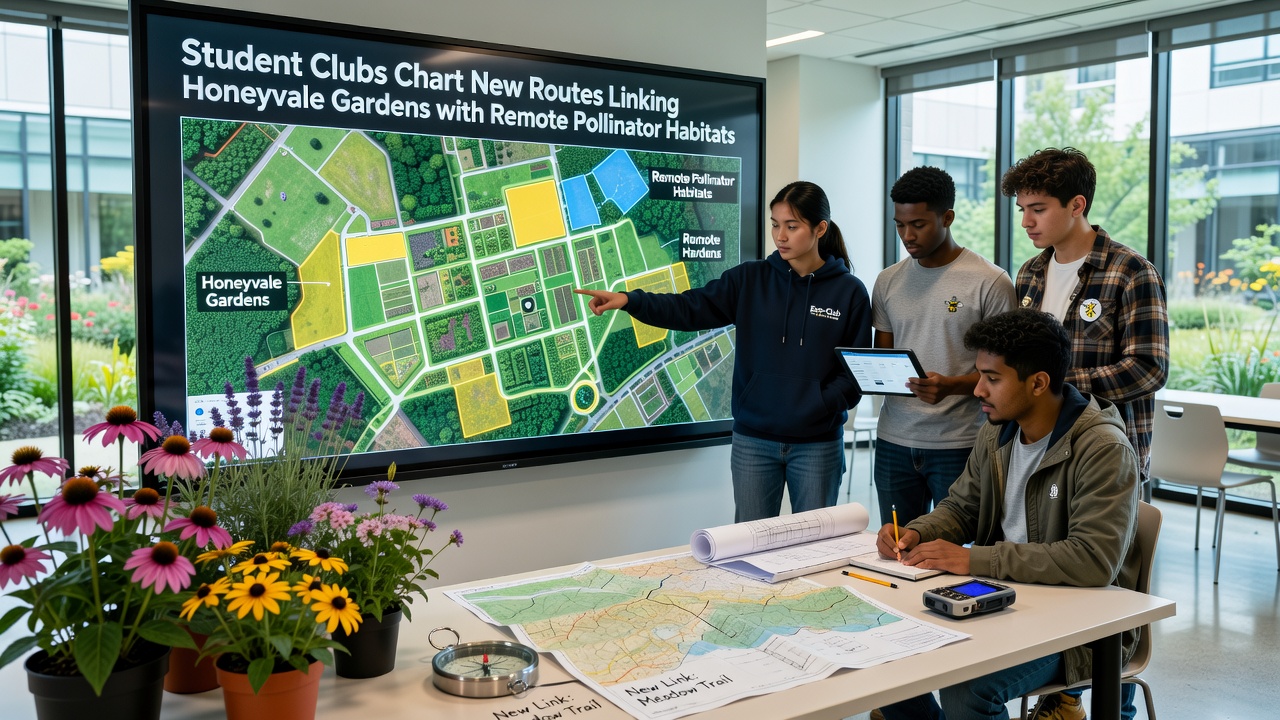
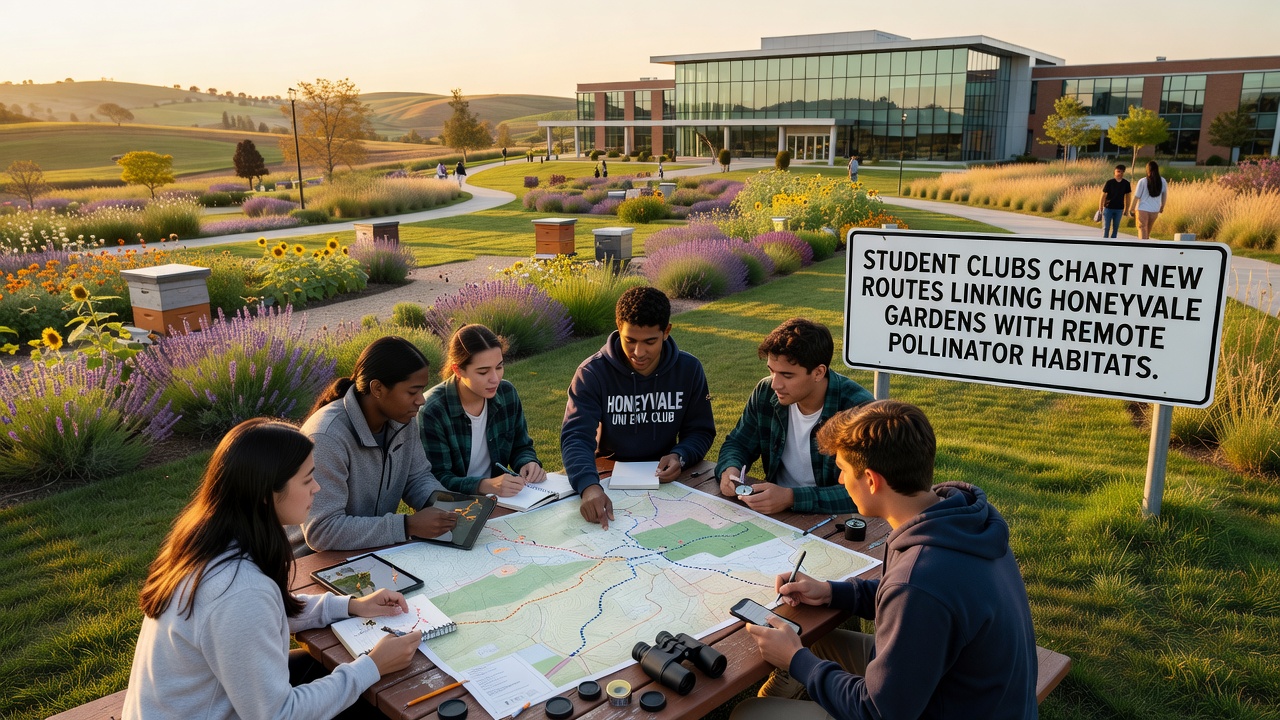
Student clubs across the Honeyvale area have begun charting specific routes that connect neighborhood gardens directly to distant pollinator habitats, and these efforts gained momentum through coordinated mapping sessions held in October 2026. Groups from local schools and colleges collaborated on field surveys that identified viable corridors for bees, butterflies, and other insects traveling between urban green spaces and protected reserves farther out in the valley.
Participants used digital tools alongside traditional observation methods to record plant species, elevation changes, and existing trail segments that could support pollinator movement, and data collected during these outings revealed several underused paths suitable for enhancement with native wildflowers. Researchers from regional universities provided guidance on habitat requirements, which helped the clubs prioritize segments where supplemental plantings would yield the greatest connectivity benefits.
Mapping Techniques and Fieldwork
Clubs divided into teams to cover different sectors, and each group focused on documenting distances, shade coverage, and water access points along potential routes, while cross-referencing findings with satellite imagery and historical land-use records. This approach produced layered maps that highlighted both opportunities and obstacles such as fragmented hedgerows or steep terrain that might limit insect travel.
One team identified a series of roadside verges that, once planted, could extend foraging opportunities by several kilometers, and another group noted abandoned utility easements that offered straight-line connections to remote meadows. These details were compiled into shared databases accessible to all participating clubs, which allowed for real-time updates as conditions changed with seasonal growth.
Partnerships with Reserves and Local Landowners
Student leaders reached out to reserve managers and private landowners to secure permissions for route testing, and several agreements emerged that permitted limited access for monitoring pollinator activity without disturbing core habitat zones. Such arrangements also opened doors for joint workshops where club members learned about long-term stewardship practices from experienced conservation staff.
According to data compiled by Environment and Climate Change Canada on pollinator corridor projects, similar community-led mapping initiatives have increased habitat linkage success rates by measurable margins in comparable landscapes. Clubs incorporated these benchmarks into their planning timelines, adjusting targets for planting density and route width based on observed patterns from those studies.
Planting Initiatives and Route Enhancements
Once routes were finalized on paper, clubs organized planting days that brought volunteers together to install milkweed, bee balm, and other nectar-rich species along the identified paths, and follow-up visits tracked germination rates while noting which sections required additional soil amendments. These activities tied into broader efforts to reduce gaps in the pollinator network, and preliminary observations in late 2026 showed increased insect sightings along several newly connected stretches.
Local businesses contributed materials such as mulch and signage, which helped mark the routes for both human users and future monitoring teams, while educational components taught younger participants how to identify key pollinator species and record sightings for ongoing databases. The collaborative structure ensured that no single club bore the full workload, distributing tasks according to each group's strengths in technology, biology, or community outreach.
Monitoring Progress and Data Sharing
Regular check-ins scheduled through the end of October 2026 allowed clubs to compare progress across routes, and shared reports highlighted consistent improvements in plant diversity at key junctions. Figures from the Xerces Society for Invertebrate Conservation indicate that connected garden-to-habitat pathways can support higher survival rates for migratory species when maintained over multiple seasons, and student groups referenced these findings when prioritizing maintenance schedules.
Digital platforms hosted by the clubs facilitated public access to route maps and sighting logs, which encouraged additional community input and expanded the network of observers contributing to the dataset. This open approach also attracted interest from neighboring districts considering similar linkage projects.
Conclusion
Student club initiatives in Honeyvale continue to refine these routes through iterative mapping and planting cycles, and the resulting connections between gardens and remote habitats provide measurable support for local pollinator populations. Ongoing data collection ensures that adjustments remain grounded in observed conditions, while partnerships with external organizations supply the technical foundation needed for sustained progress.